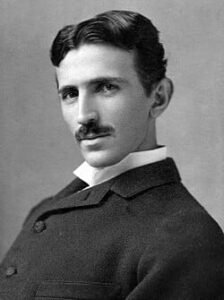
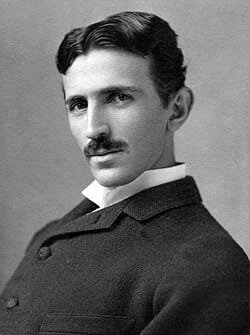
Before wireless communication, remote control, modern electric grids and many of the technologies we now consider ordinary, there was a man obsessed with imagining what the future could become.
His name was Nikola Tesla.
Born in 1856 in Smiljan, in what is now Croatia, Tesla grew up with an extraordinary fascination for mathematics, mechanics and electricity. His father was a Serbian Orthodox priest, while his mother was known for creating practical household devices despite having little formal education. Tesla later credited his mother as an important influence on his inventive mind.
Tesla would eventually become one of history’s most influential electrical inventors. Yet his life was also filled with rivalry, financial struggles, unfinished dreams and disappointments.
His story is not simply about what he invented.
It is also about what the world might have received if Tesla’s biggest dreams had succeeded.
From Europe to America: The Beginning of a Revolution
Tesla worked in telecommunications and electrical engineering in Europe before moving to the United States in 1884.
He briefly worked for Thomas Edison, but the two men had very different approaches to electricity and invention. Their relationship eventually broke down, and Tesla pursued his own ideas.
His most important breakthrough came from his work with alternating current (AC).
Tesla did not invent alternating current itself. Instead, he developed practical systems for generating, transmitting and using AC electricity, including the famous induction motor and polyphase electrical system. These innovations made it much more practical to transmit electricity over long distances.
This became a central part of the famous “War of Currents”, in which Tesla and industrialist George Westinghouse promoted AC while Edison supported direct current (DC).
AC eventually became the foundation of modern electrical distribution.
The Invention That Helped Power the Modern World
Tesla’s AC system was more than a single invention. It was an interconnected system involving generators, transformers, transmission and motors.
In 1888, George Westinghouse acquired rights to Tesla’s AC patents and worked with him to develop the technology commercially.
The importance of Tesla’s work became dramatically visible at the 1893 World’s Columbian Exposition in Chicago, where AC electricity was used to illuminate the fair.
A few years later, Tesla’s AC technology was used in the development of the major hydroelectric project at Niagara Falls. The success demonstrated how electricity could be generated and transmitted on a large scale.
Today, whenever electricity travels through a modern power grid, Tesla’s work remains part of that technological history.
Tesla Coil, Radio and Remote Control
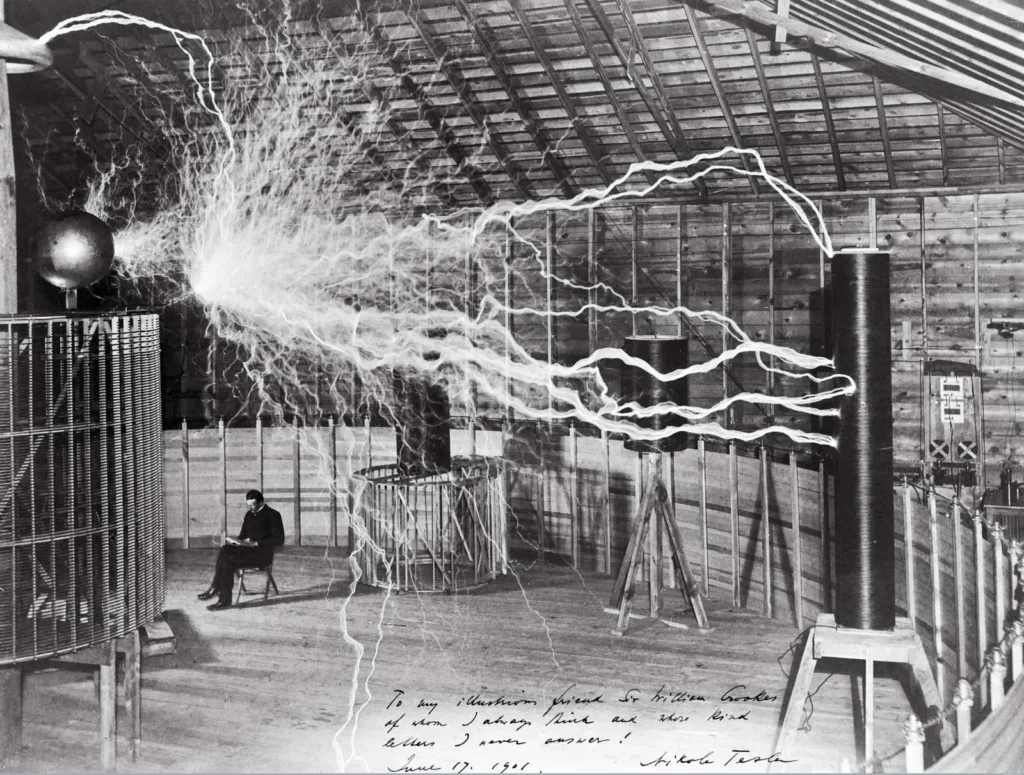
Tesla’s imagination went far beyond power stations.
In 1891, he developed the Tesla Coil, a device capable of producing high-voltage, high-frequency electrical currents. It became important in his experiments with wireless transmission and influenced later developments in electrical and radio technology.
Tesla also experimented extensively with wireless communication.
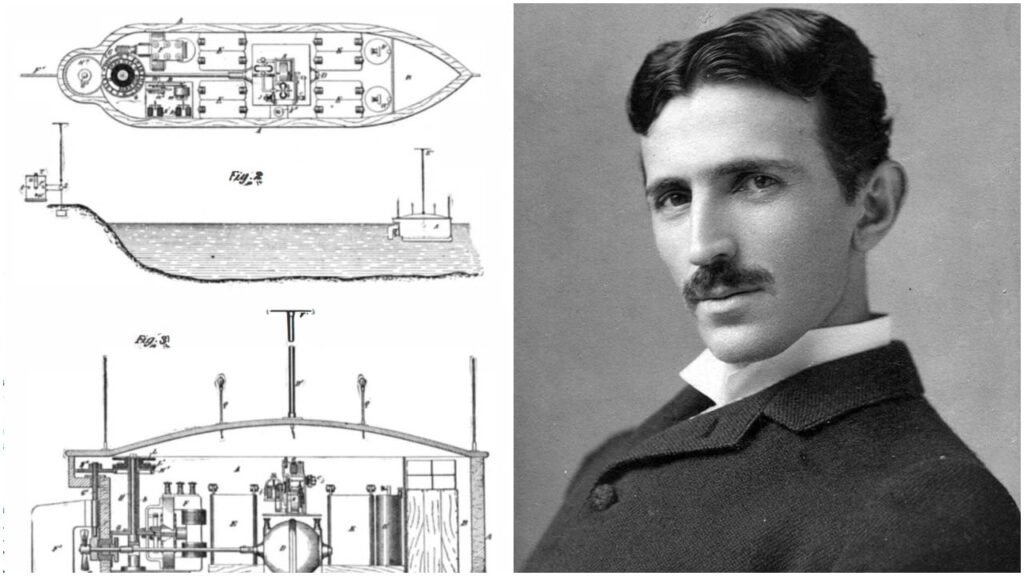
In 1898, he publicly demonstrated a radio-controlled boat, an extraordinary achievement for its time. The demonstration showed that machines could be controlled remotely using radio signals—an idea that now feels surprisingly familiar in an age of remote-controlled devices and robotics.
Tesla also developed important early work related to radio. Although Guglielmo Marconi became widely associated with the invention of radio, Tesla had filed significant wireless patents before Marconi’s famous demonstrations. In 1943, months after Tesla’s death, the U.S. Supreme Court recognized the priority of several Tesla patents in its ruling concerning Marconi’s patents.
Wardenclyffe: Tesla’s Greatest Dream—and His Greatest Failure
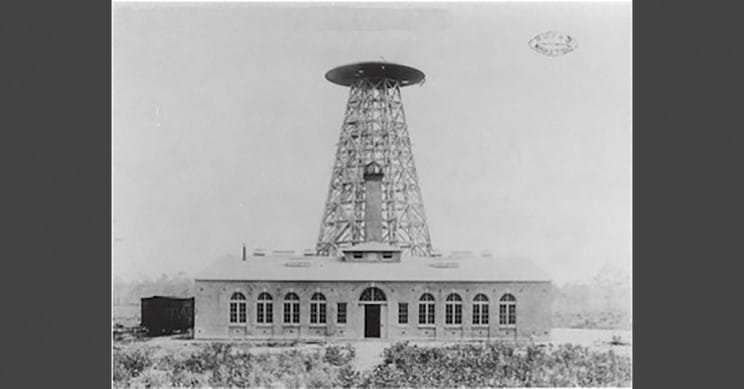
Perhaps the most fascinating chapter of Tesla’s life was Wardenclyffe Tower.
Tesla wanted to create a global wireless communication system. His vision was enormous: information could potentially travel across continents without traditional wired connections.
With financial support from J.P. Morgan, construction of Wardenclyffe Tower began on Long Island in New York.
But Tesla’s plans expanded, costs increased and additional financing did not arrive. At the same time, Marconi’s successful transatlantic radio transmission strengthened competing wireless technology.
Wardenclyffe eventually failed financially, and the tower was dismantled in 1917.
This became one of the great tragedies of Tesla’s career.
He could see a future that investors were not necessarily willing to finance.
What Could Tesla Have Given the World?
This is where Tesla’s story becomes fascinating—but also where fact and speculation must be separated.
Tesla dreamed of wireless transmission of information and potentially electrical power across great distances. He also explored automation, wireless communication, high-frequency electricity and other technologies that were decades ahead of mainstream engineering.
Some of these ideas influenced later technological developments. Others remained experimental or were never demonstrated at the scale Tesla imagined.
It is tempting to say that Tesla would have created unlimited free electricity or completely transformed the world if investors had supported him. But there is no reliable evidence that such claims would have become practical technologies.
His real achievement is already extraordinary: he helped establish technologies that became fundamental to modern electrical civilization.
The Tragedy of Nikola Tesla
Tesla’s greatest tragedy was not that he lacked ideas.
It was that he struggled to turn many of those ideas into sustainable businesses.
His later years were marked by financial difficulties and isolation. Although his inventions had helped transform modern technology, Tesla died in a New York hotel on January 7, 1943, at the age of 86. He was nearly penniless.
The contrast was extraordinary.
A man whose ideas helped power cities had ended his life with very little wealth.
A man who imagined global wireless communication died before seeing the technological revolution that his work helped inspire.
Tesla’s Legacy Today
Tesla’s influence did not disappear with his death.
His AC electrical system became fundamental to modern power distribution. His induction motor influenced countless machines. His Tesla Coil became an important part of electrical experimentation. His wireless research contributed to the history of radio and communication.
Even the scientific community eventually immortalized his name.
In 1960, the SI unit of magnetic flux density was named the tesla (T) in his honor.
His name now appears in textbooks, laboratories, museums and scientific discussions around the world.
The Real Lesson of Tesla’s Life
Nikola Tesla’s story is not simply the story of a forgotten genius.
It is a lesson about vision and reality.
Tesla imagined technologies that seemed impossible to many people around him. Some became revolutionary. Some failed. Some were exaggerated. And some remain fascinating possibilities rather than proven technologies.
But perhaps that is what makes his life so powerful.
Tesla showed that progress often begins with someone willing to ask:
“What if?”
He gave humanity practical electrical systems that still influence everyday life. He gave scientists new ways to think about electricity, communication and machines. And through his failures, he left another lesson: brilliant ideas need not only scientific knowledge, but also funding, engineering, collaboration and sound business decisions.
Tesla died believing in possibilities that much of the world had not yet fully understood.
Today, the world he imagined looks increasingly familiar.
And that may be Nikola Tesla’s greatest legacy—not that he predicted everything correctly, but that he dared to imagine a future that others had not yet learned to see.
Read More