Sikkim has launched a new AI-powered learning initiative across 71 government schools, bringing personalised digital learning to students in Classes 3 to 5. The programme, called AI-FunZone, aims to strengthen foundational literacy and numeracy while using artificial intelligence as a support tool for teachers and students.
The initiative is being implemented by the Education Department, Government of Sikkim, in collaboration with EkStep Foundation. According to the state government, the programme will initially benefit around 2,100 students studying in Grades 3, 4 and 5.
What Is the AI-FunZone Programme?
AI-FunZone is an adaptive learning programme designed to provide students with additional, personalised practice in key foundational subjects.
The pilot is being introduced in 71 government schools in the Khamdong, Nandok and Martam blocks of Gangtok district. Students will use technology-enabled learning activities in English, Nepali and Mathematics.
Rather than replacing classroom teaching, the programme is designed to work alongside teachers. AI tools can identify individual learning difficulties and provide practice based on a student’s needs.
How Will AI Help Students Learn?
One of the key features of the programme is its ability to adapt learning activities to individual students.
For example, the AI system can listen while a child reads and identify areas where the student struggles. In Mathematics, it can identify specific types of mistakes and adjust practice accordingly.
This means students can receive more opportunities to practise concepts they find difficult instead of following exactly the same practice pattern as every other student.
The government has also clarified that the programme does not use marks, rankings or comparisons between classmates as its primary approach. Instead, the focus is on helping children practise and improve at their own pace.
Around 2,100 Students to Benefit
The initial rollout covers approximately 2,100 students from Classes 3 to 5.
This makes the initiative particularly relevant because students at the foundational stage are developing essential reading, language and mathematical skills. Strengthening these abilities can help children build a stronger academic base for later classes.
The programme also reflects a wider move towards using technology to provide more personalised learning experiences in government schools.
Teachers Will Remain at the Centre
An important aspect of Sikkim’s AI learning initiative is that AI is not being introduced as a replacement for teachers.
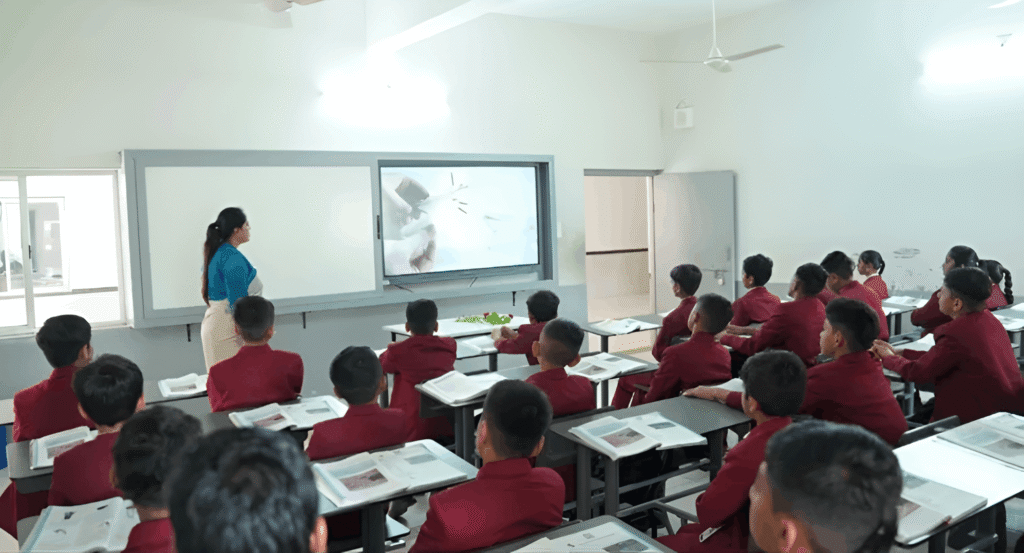
Teachers will continue to play a central role in the classroom and act as facilitators while students use AI-supported learning resources.
The AI-FunZone sessions are planned as part of the regular school timetable. Students will have a 60-minute AI-FunZone class during the school day rather than attending it as an additional class outside regular teaching hours.
This approach combines technology with teacher guidance, allowing educators to monitor students while technology provides additional opportunities for individual practice.
Real-Time Student Progress Tracking
Another feature of the programme is a dashboard designed to track the progress of individual students in real time.
Such technology can give teachers information about areas where students may need additional support. Instead of relying only on periodic examinations, teachers can potentially use ongoing learning data to understand how students are progressing.
The objective is to make classroom learning more responsive to individual needs while keeping teachers involved in the learning process.
Digital Infrastructure Remains Important
For AI-based learning to work effectively, schools need access to the necessary digital infrastructure.
According to the Sikkim government, participating schools require computers or tablets, headsets and high-speed internet connectivity. The government has also noted that some standalone primary and junior high schools have reported shortages of such infrastructure.
This highlights an important challenge for technology-based education. Introducing AI into schools is not only about providing software. Reliable devices, internet connectivity, teacher training and technical support are also necessary.
Teachers Receive Training
The initiative also includes preparation for educators and resource personnel. The government said that around 300 Resource Persons from the concerned blocks have completed training for the programme.
Teachers have reportedly responded positively to the use of technology, particularly because the platform uses interactive activities and graphics to make learning more engaging and student-centred.
Sikkim’s Growing Focus on AI Education
The AI-FunZone initiative is part of a broader technology and AI-related push in Sikkim.
Earlier in 2026, the state’s Department of Information Technology signed an MoU with NIELIT Gangtok for establishing an Artificial Intelligence Centre of Excellence under the IndiaAI Mission. The proposed centre is intended to support AI innovation, capacity building, training and skill development in the state.
At the national level, AI and computational thinking are also becoming a larger part of school education. The Ministry of Education has said that AI and Computational Thinking curriculum is being introduced for Classes 3 to 8 from the 2026–27 academic year, with an emphasis on logical reasoning, pattern recognition, algorithmic thinking, data literacy and responsible use of AI.
What This Means for Students
The launch of AI-FunZone shows how artificial intelligence is increasingly moving from discussions about future careers into everyday school education.
For students, AI-supported learning could provide more opportunities to practise reading, language and Mathematics according to their individual needs. For teachers, learning dashboards and adaptive activities could offer additional information about student progress.
However, the success of such programmes will also depend on factors such as digital infrastructure, teacher preparation, student participation and the quality of implementation.
For now, Sikkim’s 71-school pilot provides an example of how AI can be introduced as a classroom support tool rather than a replacement for teachers.
Conclusion
Sikkim’s AI-FunZone programme across 71 government schools marks a significant development in technology-enabled school education. With around 2,100 students from Classes 3 to 5 participating, the initiative focuses on foundational literacy and numeracy through personalised digital practice.
By combining AI technology with teacher-led instruction, Sikkim is exploring a model in which technology can provide additional learning support while educators remain central to the classroom.
As AI becomes increasingly integrated into India’s education system, initiatives such as this could offer valuable lessons about how schools can use technology while keeping student learning and teacher involvement at the heart of education.