For the past few years, the conversation around artificial intelligence in education has largely focused on one question: How should schools use AI?
Now, a different question is becoming harder to ignore: Should younger students be using it at all?
The rapid adoption of generative AI in classrooms is entering a new and more complicated phase. Instead of simply embracing AI as the next big education technology, schools, parents and policymakers are increasingly demanding limits, safeguards and evidence that these tools actually improve learning.
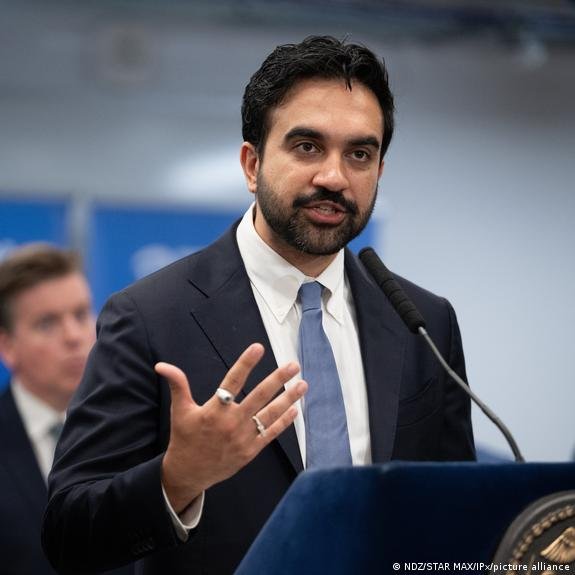
The shift is particularly visible in New York City, where Mayor Zohran Mamdani and Schools Chancellor Kamar Samuels announced a one-year moratorium on student-facing generative AI for students from 2-K through eighth grade for the 2026–27 school year. The policy affects nearly 600,000 public-school students.
This is more than another school technology policy. It could be a sign that the AI honeymoon in education is ending.
From AI Excitement to AI Skepticism
When ChatGPT and other generative AI tools entered public consciousness, education quickly became one of their biggest areas of experimentation.
AI promised personalized tutoring, instant explanations, automated feedback, lesson assistance and new ways of engaging students. Teachers and education companies began exploring how AI could reduce administrative workloads and make learning more personalized.
But enthusiasm has been accompanied by serious concerns.
Educators have questioned whether students could become overly dependent on AI instead of developing writing, reasoning and problem-solving skills themselves. Parents have raised concerns about privacy and the amount of technology children encounter during the school day.
The problem is not necessarily AI itself. The bigger question is where, when and how it belongs in education.
New York City’s latest policy reflects precisely that distinction.
NYC Draws a Line Between AI and Learning
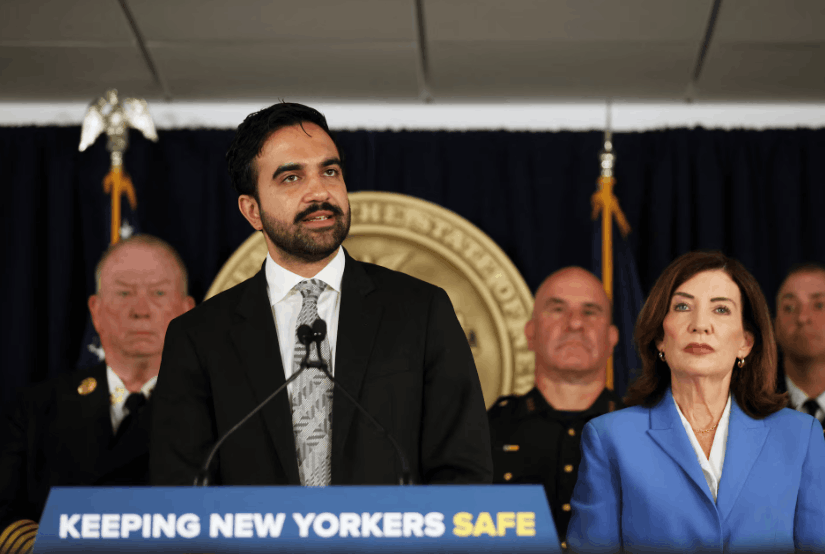
Under NYC Public Schools’ new policy, student-facing generative AI is prohibited from 2-K through eighth grade. High-school students will have limited access to approved programs under teacher supervision, alongside AI-literacy instruction.
The city is also introducing a broader approach to classroom technology.
Students in grades 2-K through second grade will have no routine one-to-one screen time. For grades 3–5, the recommended limit is 30 minutes of individual screen use per day, while grades 6–8 have a recommended limit of 45 minutes.
That combination is important.
The debate is no longer only about ChatGPT versus traditional homework. It is becoming a larger discussion about whether children need more technology in classrooms—or whether schools have gone too far in putting screens between students, teachers and the learning process.
The “AI Honeymoon” May Be Over
The early AI conversation was dominated by possibilities.
AI could supposedly transform education. It could provide every student with a personalized tutor. It could help teachers save time. It could make learning more accessible and adaptive.
Now policymakers are asking for something that technology companies have not always been required to provide: evidence.
Does an AI tool actually improve learning outcomes?
Does it encourage students to think more deeply?
Does it protect children’s data?
Does it improve teaching, or simply automate parts of it?
And perhaps most importantly: what happens when students stop struggling through difficult problems because a machine can provide an answer instantly?
NYC’s policy explicitly emphasizes keeping students as the primary thinkers and preserving human interaction, curiosity, creativity and independent problem-solving.
That represents a significant change in tone.
This Is Not a Complete Rejection of AI
Interestingly, New York City is not saying that students should never learn about artificial intelligence.
In fact, the opposite is happening at the high-school level.
Every high-school student will receive AI-literacy instruction, including lessons covering how AI works, bias, data privacy, risks and responsible use. The city will also introduce a limited number of carefully supervised AI pilots using approved programs.
This creates a more nuanced model:
Less AI for younger children. More AI literacy for older students. More supervision overall.
Teachers can also continue using approved AI tools for instructional planning and certain operational tasks, while restrictions remain on using AI for decisions such as grading and student placement.
So this is not an anti-technology policy as much as an attempt to establish a boundary between technology that supports education and technology that begins replacing parts of the learning process.
NYC Is Not Alone
New York City’s move comes as other school systems and policymakers reassess the role of technology in classrooms.
Los Angeles Unified, the second-largest school district in the United States, has also taken steps involving generative AI and technology restrictions. Meanwhile, screen-time limits and restrictions on smartphones have become increasingly common points of debate across American education.
The U.S. Department of Education has also recently emphasized that schools should prioritize instructional value over recreational technology use, while balancing innovation with evidence, educator judgment and transparency.
Together, these developments suggest a broader change.
Schools are no longer asking only “What can technology do?”
They are asking “What should technology do?”
The Biggest Risk May Be Overdependence
One of the strongest arguments behind the AI backlash is not that artificial intelligence is inherently harmful.
It is that using it too early or too frequently could change how students learn.
Learning often involves frustration, mistakes, experimentation and eventually finding an answer. If an AI system constantly removes that struggle, students may complete assignments faster without necessarily developing the underlying skills.
That creates a difficult challenge for schools.
An AI-generated essay may look impressive, but has the student learned how to structure an argument?
An AI-generated answer may be correct, but does the student understand how to reach it?
A personalized AI tutor may explain a concept instantly, but has the student learned how to solve the next problem independently?
These questions are likely to shape the next phase of AI in education.
What Comes Next for AI in Education?
The future probably isn’t going to be completely AI-free classrooms or completely AI-powered classrooms.
Instead, schools may move toward a middle ground.
AI could remain useful for teachers, accessibility, administrative tasks, research and carefully designed learning activities. At the same time, schools may place stronger restrictions on unsupervised student use, particularly among younger children.
New York City’s one-year moratorium is effectively an experiment in that direction. The city plans to study the effects of the policy during the 2026–27 school year before developing longer-term recommendations.
The larger lesson is clear: AI adoption is no longer the only story in education. AI resistance is becoming a story too.
The first phase was about getting AI into classrooms.
The next phase may be about deciding where it belongs—and where it doesn’t.
And perhaps that is a healthier conversation for education. Technology does not automatically equal progress. The real measure of innovation is whether it helps students think better, learn better and become more independent—not simply spend more time interacting with machines.