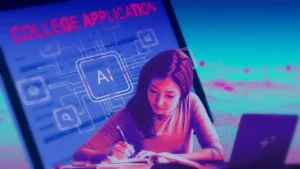
How Is AI Changing College Education?
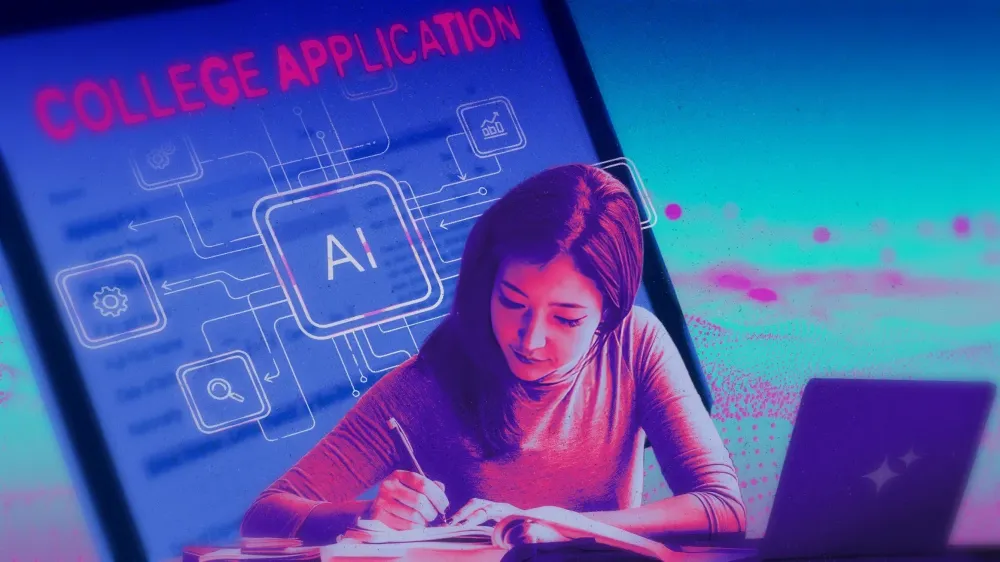
AI is changing higher education in several ways. Students can now use AI tools for brainstorming, coding assistance, research support, language learning and other academic tasks.
At the same time, colleges are reconsidering which skills students need to develop. Memorising information may become less important when technology can retrieve and summarise information quickly. Understanding, evaluating and applying information becomes more valuable.
The challenge is therefore not to compete with AI at everything it can do. Instead, students need to learn how to work effectively with AI while developing abilities that require human judgment.
Should Students Still Study Traditional Degrees?
Yes.
The rise of AI does not mean traditional degrees such as engineering, medicine, law, economics, psychology, education, commerce or the humanities are becoming useless.
Instead, students may benefit from combining their main subject with AI and digital skills.
For example:
- A business student can learn data analytics and AI tools.
- A journalism student can learn digital research and AI-assisted media production.
- An economics student can develop skills in statistics, data analysis and modelling.
- A biology student can explore computational biology and AI applications.
- A law student can learn about legal technology and AI ethics.
- A design student can learn digital tools while strengthening creative and user-centred thinking.
The future may belong less to students who know only one narrow skill and more to those who can combine subject expertise with technology and human skills.

1. Computer Science and Artificial Intelligence
Students who genuinely enjoy mathematics, programming and technology can consider areas such as:
- Computer science
- Artificial intelligence
- Machine learning
- Data science
- Software engineering
- Cybersecurity
- Robotics
The World Economic Forum’s Future of Jobs Report 2025 identifies AI and big data, networks and cybersecurity, and technological literacy among the fastest-growing skill areas through 2030.
However, studying AI does not mean every student needs to become an AI researcher. Understanding the basics of AI may increasingly be useful even for students entering non-technical careers.
2. Data and Statistics
Data is becoming one of the most important resources for modern organisations.
Students who understand statistics, data interpretation and analytical methods can potentially apply these skills across healthcare, finance, business, marketing, government, education and research.
Learning how to interpret data rather than simply collect it is particularly important because AI-generated information still needs human evaluation.
3. Healthcare and Life Sciences
AI is increasingly being applied to healthcare and scientific research, but healthcare professionals still require extensive human expertise, judgment and responsibility.
Students interested in medicine, biotechnology, nursing, pharmacy, public health or related areas should not assume that AI makes these fields less relevant.
Instead, AI may become another tool used alongside professional knowledge.
4. Business, Economics and Finance
AI is changing how companies analyse information, communicate with customers, automate tasks and make decisions.
Students studying business, economics, accounting or finance can strengthen their career preparation by learning:
- Data analysis
- Financial technology
- Business analytics
- AI applications
- Digital tools
- Critical thinking
The combination of business knowledge + technology skills can be particularly useful as organisations redesign their operations around AI.
5. Creative Fields Are Not Automatically Safe or Unsafe
AI can generate text, images, music, designs and videos, creating uncertainty for students interested in creative careers.
But this does not mean creativity is becoming irrelevant.
In fact, the World Economic Forum ranks creative thinking among the important core skills identified by employers. Analytical thinking also remains the top core skill.
Students studying design, media, communication, advertising, writing or filmmaking should therefore focus on developing original thinking, storytelling, audience understanding, visual communication and ethical judgment, while also learning how modern AI tools work.
6. Humanities and Social Sciences Still Matter
One of the biggest misconceptions about AI is that only technical degrees will matter in the future.
AI systems operate within society, which creates demand for people who understand human behaviour, culture, ethics, politics, communication and social systems.
Subjects such as psychology, sociology, philosophy, economics, political science and communication can help students understand the human consequences of technological change.
AI itself also raises questions about privacy, misinformation, bias, employment and responsibility.
The Most Important Skills May Not Be a Degree
Perhaps the biggest lesson for college students is that choosing a degree is only one part of career preparation.
According to the World Economic Forum, employers expect 39% of workers’ core skills to change by 2030. Analytical thinking, resilience, leadership, creative thinking and technological literacy are among the important skills highlighted in its 2025 report.
This means students should build a skill portfolio alongside their degree.
Skills students should develop
Analytical thinking: Learn to question information and solve complex problems.
AI literacy: Understand what AI can and cannot do.
Communication: Learn to explain ideas clearly in writing and conversation.
Creativity: Develop original ideas instead of relying entirely on generated content.
Adaptability: Be prepared to learn new technologies throughout your career.
Collaboration: Learn to work effectively with people and technology.
Domain expertise: Become genuinely knowledgeable about your chosen field.
Will AI Take Students’ Future Jobs?

AI will certainly change many jobs, but the future is more complicated than simply saying “AI will take everyone’s jobs.”
The World Economic Forum projects that technological and other global trends could create 170 million jobs and displace 92 million jobs by 2030, resulting in a net increase of 78 million jobs.
The bigger issue for students may therefore be job transformation.
Some tasks within a profession may become automated while new responsibilities emerge. A graduate may need to work alongside AI rather than compete directly with it.
So, What Should Students Study Now?
There is no single “best degree for the AI era.”
Instead, students should ask three questions:
What am I genuinely interested in?
Which problems do I want to solve?
How can I combine my subject with technology and human skills?
A strong combination could look like:
Degree + AI literacy + practical projects + communication skills + continuous learning
For example, a student studying economics could learn Python and data analysis. A literature student could develop digital media skills. A commerce student could learn business analytics. An engineering student could study AI ethics and communication.
The goal is not to turn every college student into a programmer.
The goal is to create graduates who can understand their field, use technology intelligently and make decisions that require human judgment.
Final Takeaway
AI is changing college, but it does not mean students need to abandon traditional degrees.
The smarter approach is to build a combination of subject expertise, AI literacy, analytical thinking, creativity and communication skills.
Students entering college today may work in an economy that looks very different by the time they graduate. The safest strategy is therefore not to predict one perfect career, but to develop the ability to learn, adapt and work with new technology.
In the AI era, the question may no longer be simply “What should I study?”
It may be:
“What can I learn that will help me keep learning?”
Read More